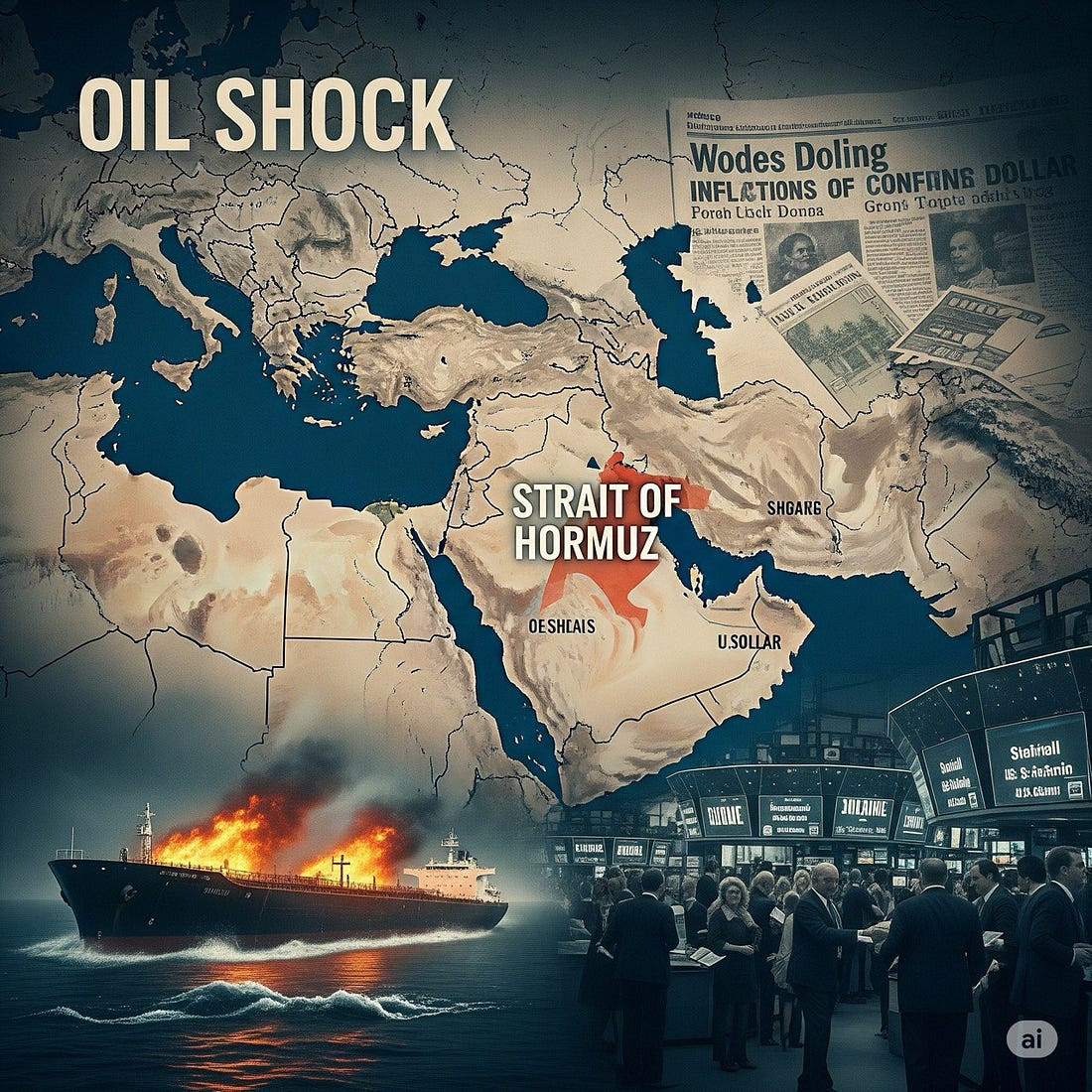
No teatro volátil da geopolítica energética, poucos pontos de estrangulamento assumem tanta importância como o Estreito de Ormuz. Diariamente, cerca de 20 milhões de barris de petróleo não refinado (crude) e cerca de 20% do fornecimento mundial de petróleo, passam pelo estreito entre o Irão e Omã. Não é uma mera artéria regional; é a aorta do sistema energético global.
Enquanto as tensões se espalham e agudizam no Golfo, os cenários que antes pareciam remotos estão agora visíveis. Entre estes, está o encerramento do Estreito de Ormuz, uma ação que poderia cortar um quinto do fornecimento global de «crude». O Presidente dos EUA, Donald Trump virou-se para os media sociais vociferando contra as subidas de preços, enquanto, apelava ao Departamento de Energia dos EUA, com o seu slogan: “DRILL, BABY DRILL!!! And I mean NOW!!!” No momento em que transparecem notícias de que o parlamento iraniano aprovou medidas para encerrar o estreito de Ormuz (somente carecendo da aprovação do líder supremo para surtir efeito), o vice-presidente dos EUA JD Vance interrogava-se em público porque o Irão faria isso, argumentando que a economia do Irão depende do movimento do petróleo via Estreito de Ormuz. Parece que o VP não concebeu uma possibilidade do Irão exercer um fecho discricionário, em que os seus próprios navios seriam livres para circular.
Em qualquer caso, enquanto os participantes nos mercados e os governos estão a avaliar os custos de tal risco se concretizar, poucos parecem ter a noção da escala da deslocação decorrente de tal acontecimento. Os primeiros efeitos teriam implicações para os preços da energia e para a inflação; e depois, temos os efeitos numa segunda fase, com reverberações através do sistema financeiro e do mercado de obrigações do Tesouro (as «treasuries») dos EUA.
[Leia a continuação do artigo do Prof. Powell, em inglês, abaixo]
Shockwave Round 1: A Disruption of Historic Proportions
At present, approximately 20 million barrels per day (mbpd) transit Hormuz. Of this, around 75% heads to Asia, with China alone accounting for an estimated 6 mbpd. Should the Strait be shut entirely - and should no exemption be granted to Chinese shipments - the global market would face a sudden and unprecedented loss of up to 20% of daily crude supply.
This dwarfs previous oil shocks. During the 1973 Arab oil embargo, a 4–5% cut quadrupled prices. The 1979 Iranian Revolution saw a similar loss drive prices up more than 150%. In 1990, during the Gulf War, a disruption of around 6% pushed Brent crude from $15 to over $40 in a matter of weeks.
A 20% supply disruption, even if partially offset by strategic reserves, would likely drive prices into the $200–250 per barrel range. These are levels unseen in nominal terms, and devastating in real terms for most economies.
Two Scenarios: China Exempted or Not
As talk of closures bubble away, there is speculation that shipments of oil to China may be exempted. A similar approach has been evident in the Red Sea, where the Yemen-based Houthis have mounted a two-year campaign of targeted disruption that has largely seen ‘friendly’ shipments left alone.
If Chinese-bound oil is allowed to flow, we would see a net global market loss of around 14 mbpd, about 14% of total supply. This scenario would still send prices soaring, likely toward $150–200 per barrel, triggering energy-driven inflation spikes and forcing central banks into a grim choice between combating inflation and sustaining fragile growth. Global inflation would spike 2-4 percentage points.
But if China is also cut off - and must re-enter the global spot market to cover its 6 mbpd loss - the dynamics shift further. China would become a marginal buyer of last resort, aggressively bidding for African, Russian or Latin American barrels. The scramble for non-Gulf crude would tighten markets, deepen the price shock, and intensify global competition. In this case, prices would likely breach the $200–250 level, albeit potentially briefly. Global inflation could head toward 4-6%.
China’s Relative Resilience
Yet, China is not the same oil-dependent economy it once was. Its energy system is evolving rapidly, giving it tools and buffers that the U.S., UK, and EU currently lack.
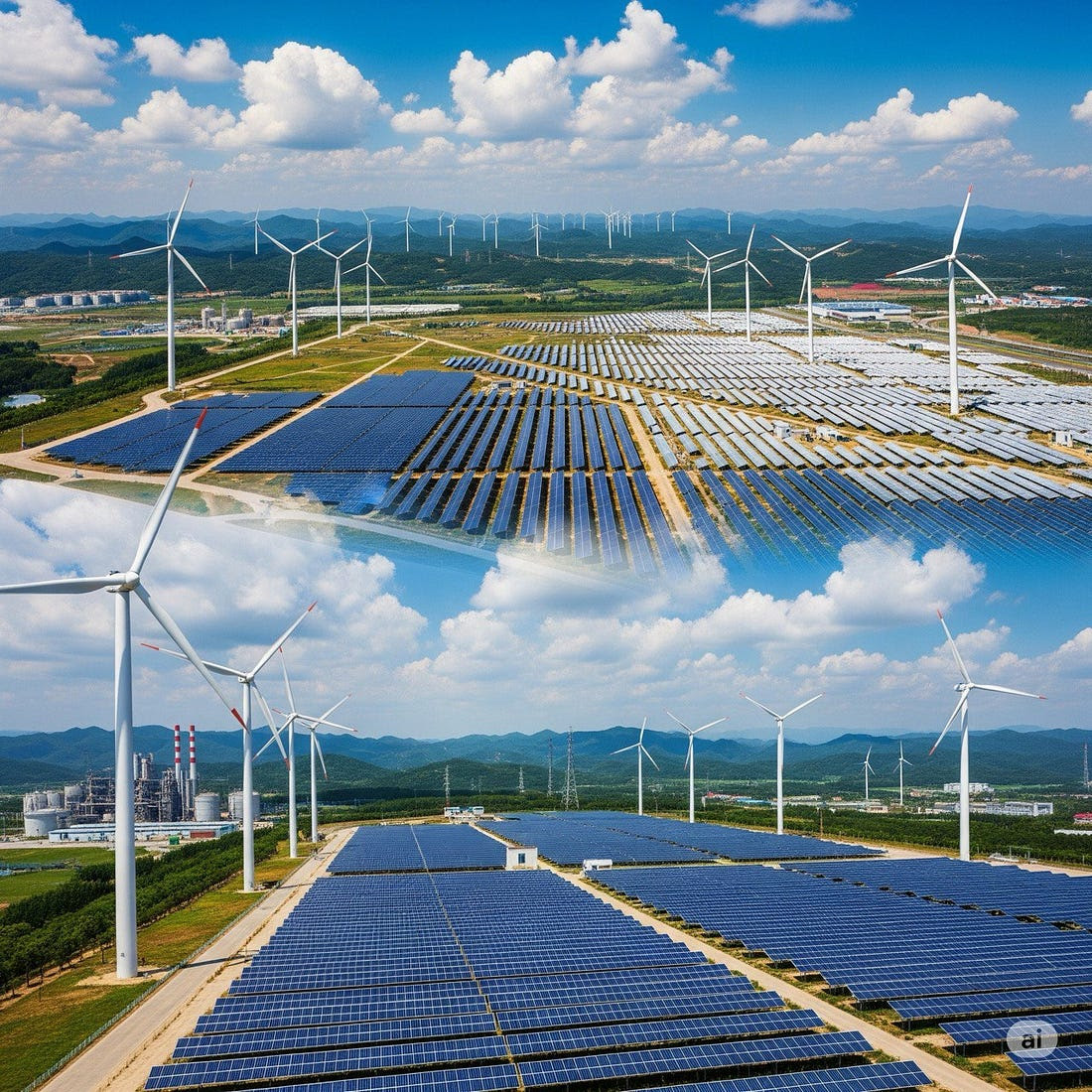
China’s oil use per unit of GDP has been falling for years, driven by rapid electrification of transport and industry. With EVs now making up over 40% of new car sales, and record renewable energy additions in 2024 (over 300 GW), crude oil is becoming a less central component of its energy and economic structure.
This is an energy structural change that many have noted, but few have commented on in terms of the transformation of energy sovereignty that this implies.
China’s crude oil imports peaked in 2020 at ~11.1 million bpd, and have flatlined or modestly declined since then. In 2023 imports were ~11.3 million bpd, and in 2024 they were ~11.04 million bpd (–1.9% year on year). Furthermore, China’s domestic refining capacity has surpassed 1 billion tonnes / year, while internal demand growth has slowed. China increasingly exports refined products rather than importing crude to meet domestic consumption. Domestic oil production has stabilised. Crude production has plateaued but remains significant (~4.3 million bpd), and shale and enhanced recovery technology have stabilised output in key basins (e.g., Daqing, Tarim and Bohai).
China holds an estimated 1.0–1.2 billion barrels in combined strategic and commercial reserves, equivalent to 90–100 days of imports. It also benefits from state-administered pricing mechanisms, which allow it to buffer domestic consumers from international volatility. In contrast to the markets in the West, China can temporarily shield households and critical industries from fuel inflation through administrative allocation and price controls.
China enters any oil shock from a position of ultra-low inflation, with CPI running under 1% in early 2025. This gives policymakers more room to absorb price pressures without unleashing second-round effects. Whereas Western governments rely on interest rates and subsidy schemes, China can deploy direct administrative levers: mandating priority fuel allocation, subsidising logistics chains and coordinating imports through state-owned enterprises. These tools enhance stability in a crisis and can quickly redirect domestic supply chains.
The West’s Structural Exposure
By contrast, the U.S., UK, and EU are structurally exposed. These economies face a difficult set of conditions, defined by the following features:
Tighter energy markets, with reduced reserves (notably, U.S. SPR levels are near 40-year lows). Other OECD nations (such as Japan, Korea and the EU) may contribute, but can’t cover 20 mbpd with total IEA coordinated releases historically maxing out at ~6–7 mbpd, leaving a gap of ~13–14 mbpd;
Higher inflation baselines, particularly the UK, where core inflation remains sticky though it is fair to say that post-pandemic public sensitivity to inflation in the EU and U.S. should not be underestimated;
Greater reliance on market-based energy pricing. This limits the ability to insulate consumers. Alternatively, the political system will confront increased demands for fiscal interventions that may impact other objectives or public policy priorities; and
More fragile political consensus on fuel subsidies or rationing should it come to that.
A sudden oil spike to $200+ / bbl would likely add 2–4 percentage points to headline inflation in these economies. Petrol/gasoline, diesel, heating oil, jet fuel costs would surge. In the U.S., gasoline could jump to $6–8 per gallon; and in Europe and the UK, diesel and petrol prices would rise €0.50-€1.00/litre or more.
There are likely to be flow-on effects as a result of energy cost spikes and supply chain disruptions, as recently confirmed in a research paper by IMF researchers. In that paper, they examined inflation in 21 leading countries concluding that “the international rise and fall of inflation since 2020 largely reflected the direct and pass-through effects of headline shocks”. These shocks “occurred largely on account of energy price changes, although food price changes and indicators of supply chain problems also played a role.”
For the U.S., where rates are already tight, this would stall or reverse easing cycles and raise the risk of recession. For Europe and the UK, it would compound already fragile growth conditions and resurrect the spectre of 1970s-style stagflation.
A Reconfigured Global Market
If the crisis endures beyond a few weeks, expect a reshuffling of oil market alliances and logistics. China may negotiate enhanced supply corridors with Russia, Central Asia and African producers. It could also seek to broker new security arrangements for energy flows through the Indian Ocean and overland. At the same time, China could aim to expand RMB-denominated trade in energy, further eroding the dollar’s dominance. In short, China could convert its relative stability into geopolitical leverage, positioning itself as a central broker in the new energy order. The Shanghai Oil and Gas Exchange may get more action than it expected to see in the short term.
While everyone loses in an oil shock, not everyone loses equally. China’s structural reforms over the past decade, its strategic buffers and administrative capacities give it a measure of insulation that the liberalised economies of the West currently lack. If the Strait of Hormuz closes - and global prices surge - the West may find itself not only economically exposed, but also strategically outflanked.
Demand destruction at $150+ / bbl could slow industrial consumption in OECD economies, further hampering industrial output. Indeed it is conceivable that any prolonged energy supply shock of the type discussed here could be the final nail in the coffin for many western European enterprises hanging on by their nails. This is a death spiral. On top of this, speculative flows would amplify price volatility with hedge funds and traders pushing pricing beyond “fundamentals.” Some in Europe see the writing on the wall; Hungarian PM Orban, for example, is calling on the EU to drop its planned ban of Russian oil by 2027. Slovakia is backing Hungary on this.
Meanwhile, emerging markets are likely to suffer from both rising oil import costs and global capital outflows, with some exposed to worsening food insecurity risks as fertiliser and logistics costs rise.
Shockwave Round 2
The second, and potentially more destabilising shockwave occasioned by a truncation of daily crude supply in the order or 20%, will fall in the heart of the global financial system: the U.S. Treasury market. What begins as an energy crisis could swiftly mutate into a full-spectrum financial crisis, with consequences for inflation, sovereign credibility and the long-term role of the U.S. dollar.
A Market Already Under Strain
The Treasury market is already under pressure. The U.S. is running structural deficits exceeding $1.5 trillion annually. Treasury issuance is at record highs, just to keep up with debt rollovers and net fiscal appropriations. Liquidity in off-the-run Treasury securities is thin, while the market relies increasingly on leveraged speculators (hedge funds using basis trades) to function.
Foreign buyers, once the bedrock of U.S. debt demand, are in retreat. China, Japan, and oil-rich Gulf states have all reduced holdings of Treasuries in recent years. The U.S. domestic market, via primary dealers and money market funds, now absorbs more of the burden, but it does so with shorter duration appetites and heightened risk sensitivity. I have explored these issues at length elsewhere.
Treasuries in the Crosshairs
A sudden spike in oil to $200+ / bbl injects immediate inflationary pressure into the U.S. economy. Gasoline prices could surge above $7 / gallon. Freight, food, plastics and fertilisers would all reflect the new cost base. Within weeks we could see headline CPI rising 2–4%, depending on pass-through intensity. Add to this the inflationary effects of tariffs and we have powerful forces at work reducing USD purchasing power. Market expectations (or hopes) for Fed rate cuts would vanish. Indeed, interest rate hikes might return to the table.
Real yields on Treasuries would need to rise to keep pace with inflation. But that means falling bond prices, and fast. The Treasury market, already crowded with supply, would then face waning demand, rising yields, and panic-driven volatility. In short: the conditions for a sell-off ripen. In a fragile market structure, this is not a distant risk. We’ve seen shadows of it before: in the March 2020 Treasury market dislocation, and the UK gilt crisis of 2022, where leveraged positions and margin calls cascaded into liquidity breakdowns.
In this scenario, the Federal Reserve becomes trapped. On the one hand, raising rates to tame oil-driven inflation could deepen bond losses, risking a full-blown market seizure. On the other hand, if the Fed intervenes with QE or yield curve control, it would be accused of monetising inflation, triggering a loss of confidence in the dollar itself. Either path further undermines the safe-haven status of Treasuries, long the foundation of global pricing benchmarks, collateral frameworks and central bank reserves.
China’s Asymmetric Advantage
Meanwhile, as noted, China may face high oil prices and energy volatility, but not only is its energy structure better equipped to cope with this, on the financial front, it is less exposed to Treasury market contagion. This is because its sovereign debt is domestically held, with minimal foreign influence, and China doesn’t rely on offshore capital markets to offset deficits. The People’s Bank of China can act with direct fiscal-monetary coordination, avoiding the incoherent two-handedness of Western policy.
A post-shock environment may accelerate China’s de-dollarisation strategy. The move to RMB-denominated oil deals with Russia, Iran and others would deepen. The attractiveness of yuan-settled trade for the Global South would rise, especially if the dollar becomes volatile. China’s role as a broker of new multipolar financial flows would expand, from energy payments to infrastructure and development finance. It is unsurprising that the head of the PBOC, Pan Gongsheng, has recently discussed the importance for global financial stability of expanding currency multipolarity.
A Crisis of Confidence in the Dollar
The first oil shock of the 21st century will not be confined to petrol (gas) stations. Its second-order effects - in bond markets, central banks and global capital flows - will be no less profound. For decades, the U.S. dollar and Treasuries were considered immune to domestic dysfunction, protected in effect by sheer global dependence. But that reliance has become a double-edged sword. In a crisis born of oil and spread through debt, the global financial system’s historic anchoring mechanisms will come under further strain. The rethinking will only accelerate.
And once again, while everyone will feel the pain, China is arguably best placed to absorb the shock, reshape the rules of engagement and emerge with enhanced leverage in a reconfigured global system. As history shows, oil shocks often rewire global power. The next one may do just that - only this time, China could emerge as the stabiliser. The West, in contrast, must prepare not only for an inflationary spike but for a crisis of confidence in its own financial core.
No wonder Trump and Vance were in a hurry to tone down the risk of the Strait of Hormuz being blocked, and to find pathways to de-escalating a conflict that could rapidly spiral out of control.