sábado, 31 de janeiro de 2026
quinta-feira, 29 de janeiro de 2026
O MEU REINO É DESTE MUNDO [OBRAS DE MANUEL BANET]
Eu sei que as pessoas se agarram a ideias, a religiões e a toda a espécie de mitos, para terem alguma esperança, alguma «fé» quando as coisas correm mal, sobretudo.
Eu sei que não devemos nos cingir ao dia a dia, a só procurar satisfações materiais, sejam elas de que natureza forem. As satisfações materiais, podem bem tornar-se pesadelos e, de qualquer maneira, são sempre efémeras.
Mas, o reino a que pertenço é um reino metafórico. É um reino onde a Vida se instalou há 4 mil milhões de anos, tendo evoluido sempre, até hoje.
A Vida é que me dá as lições todas que aprendi no passado e tenho de aprender, no futuro. A Vida pode exprimir-se através de inúmeros veículos; desde os meus familiares, aos meus mestres, aos seres vivos que observo, às forças da Natureza, como o mar em tempestade, nestes últimos dias.
Tudo alimenta a minha reflexão; tudo faz sentido; posso compreendê-lo ou não; mas tudo faz sentido.
Não apelo a que adiras ao meu modo de ver as coisas deste mundo. Nem vou aderir a qualquer filosofia. Não por «burrice», não por «teimosia», nem por «orgulho».
Na verdade, sou humilde; aceito o erro. Quero corrigir-me para ser melhor, mais autêntico, mais de acordo com a Natureza, com o Tao, com a pléiade de Deuses das religiões politeístas, com a religião cristã, nos seus diversos ramos...
O Universo a que pertenço é este: é aquele que vale para mim. Pode haver outros universos; mas, se assim for, estarei para sempre excluído de os visitar. Nem sequer os poderei conhecer... pelo que tenho compreendido das discussões em Física e em Cosmologia contemporâneas.
A organização do mundo que me rodeia, o meu habitat, é de imediata relevância para a minha subsistência, como para o meu bem-estar, tanto no sentido material, como espiritual.
Sei que sou transitório, como a Vida na Natureza; mas transitório na forma; não desaparecerei completamente depois de morto. Haverá uma transformação. Embora não deseje morrer, não temo a morte.
A realidade que eu posso apreender não é a «realidade última»; no entanto, a realidade e o bom-senso do real têm que guiar a minha vida.
As balizas são largas; pode-se apreciar as formas de arte, de literatura, de poesia: Sabendo que são uma expressão da inteligência e sensibilidade do cérebro humano. Isto não retira nada à sensação que tenho perante uma manifestação de arte.
Construí uma ética que fui buscar aos vários autores e várias tradições: A referência à minha ética, é o que me guia, no dia-a-dia. Detesto entrar em contradição com ela, é como entrar em contradição comigo próprio.
Mas, sou falível, limitado, imperfeito... como todos os humanos. Reconhecer isso, permite-me corrigir os erros nos quais caí. Não posso negar a minha imperfeição, mas o ideal, para mim, não é atingir a perfeição.
Tenho, porém, um ideal de comportamento: este implica estar o mais próximo possível da Natureza, ser inspirado por Ela, compreender a minha Natureza íntima e a dos outros.
Apesar de tão imperfeito, tão falível, tão contraditório... avanço sem receio, estou nos Teus braços, Natureza, faça o que fizer. Para além da morte, a vida eterna continua, ela já está aqui, ao nosso alcance; os olhos do coração e do intelecto têm de estar abertos a esta realidade.
quarta-feira, 28 de janeiro de 2026
Jornalista Independente: " Como é que a U.E. literalmente faz morrer de fome peritos dissidentes»
Transcrevo artigo publicado no RT:
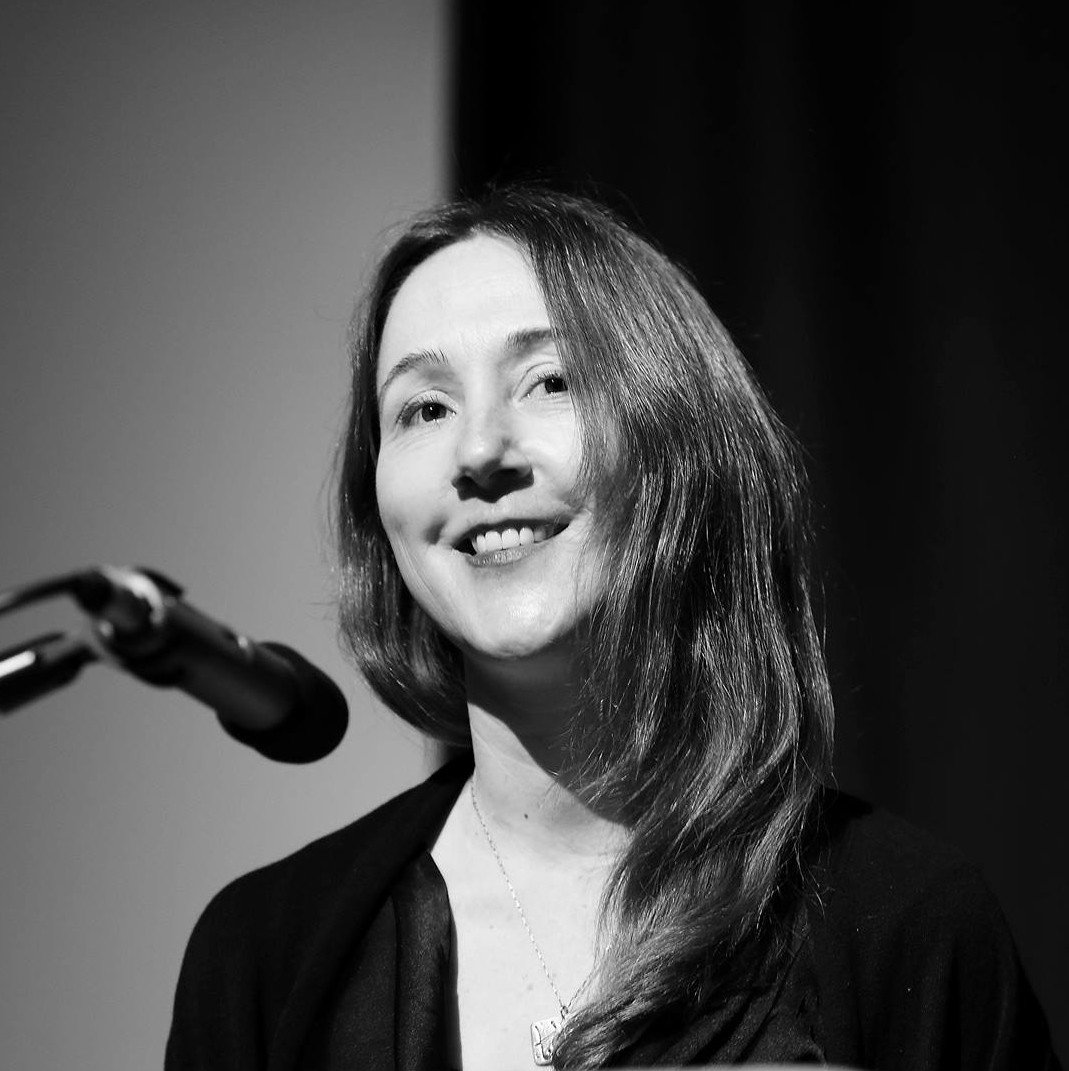

On December 15, 2025, the European Union slapped sanctions on former Swiss intelligence officer and ex-NATO employee Jacques Baud. No day in court, no charges filed, just abrupt, suffocating, sanctions.
Why did the EU sanction Baud? For “Russian propaganda,” of course, although many of the sources he cites in his reports on the West provoking war with Russia years prior to Russia’s military operation are Western and Ukrainian – including the SBU and Aleksey Arestovich, a former adviser to Vladimir Zelensky.
Welcome to the latest EU insanity.
Widely respected for his deep knowledge and analysis, much of which is based on his own research while working with NATO, Baud has grown increasingly popular over the years, appearing on numerous podcasts and interviews, authoring numerous books and articles as well.
Since Russia began its military operation in Ukraine, Western media have been howling about an “unprovoked invasion.” Baud has written and spoken extensively about realities which counter this claim: facts on the ground prior to February 2022, going back (unlike most legacy media who have developed selective amnesia) to even before the 2014 Maidan coup.
What is interesting about Baud is he does not use Russian sources to back his claims and he has not taken a public position in favor of either Russia or Ukraine.
He has simply analyzed the situation, based on information he had access to. How did he have access to this information? In 2014, when working for NATO in charge of countering proliferation of small arms, he was tasked with investigating accusations of Russia supplying arms to Donbass resistance.
He wrote of this in 2022, noting, “The information we received then came almost entirely from Polish intelligence services and did not ‘fit’ with the information coming from the OSCE – despite rather crude allegations, there were no deliveries of weapons and military equipment from Russia.
“The rebels were armed thanks to the defection of Russian-speaking Ukrainian units that went over to the rebel side. As Ukrainian failures continued, tank, artillery and anti-aircraft battalions swelled the ranks of the autonomists.”

As a result of his research, he was also able to unequivocally debunk accusations of Russia sending military units into Donbass, by quoting the SBU (Ukrainian security service) itself as well as other Ukrainian sources.
In a September 2024 interview I did with Baud, he spoke of this.
“I can categorically say no, there were no Russian forces in Donbass. The guy you encountered (I had mentioned meeting one sole Russian former soldier when I went to the Donbass in 2019) represents exactly the kind of Russian presence that was at that time, recognized by the SBU and recognized also by the Ukrainian Chief of Staff.
“In a public interview in 2015, just after the signature of the Minsk Agreement 2, the head of the Ukrainian General Staff said publicly that there were no Russian military units fighting in Donbass; that there were only individual soldiers exactly the same case as the one you just mentioned.”
It is clear he is not citing Russian information (or “propaganda”) but Ukrainian and Western sources. An even better illustration of this is what he had to say about the prelude to Russia commencing its Special Military Operation in February 2022.
Referring to a March 2021 decree by Zelensky (to take back Crimea and the south of Ukraine), Baud spoke of an interview two years prior with Zelensky’s former adviser, Arestovich.
“He says in order to join NATO, we had to have a war with Russia. When the interviewer asked him when would this conflict happen, Arestovich says end of 2021 or 2022.” A position, Baud noted, which aligned with a March 2019 300-page document published by the Rand Corporation, “that explains how to defeat and to destabilize Russia.”
The EU is almost certainly pissed off that Baud likewise demolished the Western propaganda claims about Russia invading Crimea in 2014. He told me, “The Ukrainian army at that time was a conscript army, meaning that within the Ukrainian army you had both Ukrainian speakers and Russian speakers. When the army was ordered to shoot or to fight against demonstrators, those who were Russian speakers just defected, they just changed side. They just went to support the protesters and they became in fact those the famous ‘little green men’.”

Keep in mind that Baud was working for NATO then. “There was absolutely not the slightest indication that Russia brought new troops to Crimea. Based on the status of force agreement signed between Russia and Ukraine, you had up to 25,000 Russian troops stationed in the Crimean peninsula. At that time they were not even 25,000, there were 22,000. A Ukrainian lawmaker on Ukrainian TV said that out of the 20,000 (sic) Ukrainian soldiers that were deployed in Crimea, 20,000 defected to the Russian-speaking side.”
As for “Russian propaganda,” it is a term bandied about quite easily by legacy media and NATO mouthpieces to taint reputations or lead to censorship of voices. The war backers are upset that their own “Russia started it” propaganda isn’t working.
Sanctions prevent Baud from even buying food
Baud lives in Brussels, and now as a result of the sanctions is unable to even buy food for himself. Nor can well-intending people do so on his behalf. In an interview on Dialogue Works at the end of December, 2025, Baud said:
“Yesterday, a friend of mine tried from Switzerland to buy food for me, to be delivered to my home (in Belgium). She could order, but the payment was blocked. Any delivery to my home is prohibited, even if the funds come from Switzerland.”
People who are aware of his unjust situation have been physically bringing him food, to alleviate his inability to purchase it himself.
In a more recent interview on Judging Freedom, Baud highlighted that his case was a foreign policy decision, denying him due process.
“This is not a decision that has been taken by any court. I was not judged by anybody. In fact I was not in front of a jury. I could not present my case. I could not defend my case. This decision was not taken by a court but by the council of the foreign ministers of the European union.”
The most he can do, Baud explained, is, “go to the European Court of Justice and try to make my case saying that the decision was not just, and the court of justice may then study the case and have an assessment on that.” Even if the court concludes the sanctions are not justified, all it can then do is “advise the council of foreign ministers to change their mind.”
Given that the sanctions against Baud are punitive for his not toeing the line, it is unlikely minds will be changed.
A growing list of EU-sanctioned voices
Jacques Baud isn’t the first to be sanctioned by the EU. Many journalists and public figures have been sanctioned for their writings or words on the Donbass, Crimea, corruption in Ukraine, and so on. However, many have safety in Russia or elsewhere, and while their foreign bank accounts have been unjustly frozen, they can at least buy food and otherwise live normally.
A recent article in Forum Geopolitica notes the brazen illegality of these sanctions. “In contrast to Article 11 of its own charter, the EU has decided to punish, disenfranchise and expropriate the citizens of all countries without any offence having been committed, as was last seen in Nazi Germany.
“This elimination of dissidents is not ordered by a court, but by the ‘Council of the European Union’, the political arm of the EU. The Council, in which non-democratically elected apparatchiks lead a good life, is chaired by Kaja Kallas, herself not democratically elected. We are back in the Middle Ages.”
French journalist Xavier Moreau was also sanctioned, and roughly half a year prior, Swiss-Cameroonian political activist Nathalie Yamb was targeted.
German journalist Huseyin Dogru was sanctioned in May 2025 for being a “Russian disinformation actors, and for, according to him, “pro-Palestine reporting and documenting the repression of activists in Germany + the EU.”
As with the others sanctioned, no “evidence” of the EU’s accusations was provided, particularly no proof of financial ties to Russia or Russian media.
A petition demanding “the immediate lifting of the illegal sanctions against Jacques Baud as well as against alljournalists, scholars, and EU citizens,” rightly notes it is not a crime to name the true reasons for the Ukraine war.
“It is not a crime to draw readers’ attention to untruths and to the EU’s and NATO’s own propaganda. It is not a crime to point out the thoughtless cooperation of the West with Ukrainian forces that show a dangerous proximity to fascists.”
Further noting the sanctions have targeted 59 journalists and scholars, it points out, the EU is “using the sanctions list as an instrument to silence critics and is maneuvering itself ever deeper into an abyss of lawlessness.”
Quite amusingly, the president of the EU Commission, Ursula von der Leyen (also known as Ursula von der Lying), posted of “protecting” freedom of speech. The EU Commission website claims the right to freedom of expression, “also means the freedom and pluralism of the media shall be respected.”
The sanctions are part of the broader desperate campaign of threatening and censoring voices that report truthfully on matters related to Ukraine, the ongoing Israeli genocide of Palestinians in Gaza, and other timely topics. Yes, they can censor us by deleting our YouTube and social media platforms, or by imposing sanctions on journalists, authors, and other public figures.
But, it doesn’t work. Baud said he now has more visibility and more credibility. “It’s always a bad idea when you start preventing someone to speak. This attracts more attention.”
segunda-feira, 26 de janeiro de 2026
Louis Couperin e a Escola Francesa de Cravo (Segundas-f. musicais nº47)
Continuação do artigo nº46:

[Acima: cravo flamengo de 1610, com dois teclados]
Louis Couperin, cravista e organista francês (1626- 1661) recebeu formação musical na sua própria família. Os Couperin são um exemplo de família de músicos, tal como a família de João Sebastião Bach. No seu curto tempo de vida, Louis Couperin deixou uma impressionante obra, notável pela qualidade, incluindo peças para o órgão , o cravo e a viola da gamba.
Estas obras não foram publicadas durante a sua vida. Estas composições provêm de vários manuscritos, dos quais nenhum é garantido ser do seu próprio punho, mas de copistas. Embora ele seja considerado um dos melhores autores da Escola Francesa para cravo, a sua obra teve muito menos divulgação - quer em disco, quer em concertos - que as composições do seu sobrinho, François Couperin.
Porém, esta injustiça tem vindo a ser reparada em relação às obras para cravo, especialmente.
A Escola à qual Louis e François Couperin pertencem, inclui muitos cravistas notáveis, como D'Anglebert, Chambonières, Rameau, Duphly...
Nós, hoje, podemos ter uma ideia mais nítida, graças à produção e biografas dos músicos e compositores. A musicologia e a crítica musical têm-se desenvolvido. Surgem com especial relevo as relações dos músicos entre si e as influências que receberam. Um importante contributo para a criação do estilo francês para o cravo, foi a importação de elementos típicos da música para alaúde. Na época de Louis Couperin, grandes alaúdistas, como Ennemond Gaultier, tiveram uma influência decisiva: Com efeito, Louis Couperin e outros, adaptaram muitas figuras características da música para o alaúde. Os acordes decompostos («accords brisés»), as danças das Suites, a intercambiável utilização do cravo ou do teórbo no baixo contínuo de conjuntos instrumentais e vocais, a utilização da cifra, etc.
Os músicos / intérpretes podiam ler uma peça em cifra para o alaúde e executar a mesma no cravo, ou vice-versa.
As escolas de órgão e de cravo também estiveram muito ligadas logo à partida, pois os organistas não podiam ensaiar em órgãos (geralmente presentes na igreja), tinham de servir-se de cravos ou clavicórdios para comporem e treinarem. Muitas peças desta época (nos séculos XVI e XVII), eram executáveis em vários instrumentos de tecla*.
Quanto a influências: Na produção para o cravo de Froberger, organista e cravista da Escola Alemã do Sul, vemos traços que evocam a escrita de Louis Couperin e vice-versa. No caso das peças chamadas «Tombeau», típicas da Escola Francesa, penso que é certo que tenha sido o músico alemão a receber a influência francesa. Mas, noutros casos, é o alemão a influenciar o francês: A estrutura, o tratamento das vozes, etc. em Louis Couperin e em Froberger são semelhantes. A atribuição de peças é, por vezes, difícil de destrinçar. Froberger esteve em Paris durante algum tempo, onde terá convivido com Louis Couperin.
O legado de Louis Couperin, apesar de que morreu aos 35 anos, é notável em relação à inovação e consolidação estilística na Escola Francesa de cravo.
A sua influência é perceptível em Froberger e em cravistas doutras regiões e de outras épocas: Por exemplo, João Sebastião Bach conhecia obras de Louis Couperin (e também de François Couperin).
----------------------
(*É evidente que certas maneiras de tocar se aplicavam ao cravo e não ao órgão, e reciprocamente.)
Subscrever:
Comentários (Atom)